Image: Tesla Gigafactory Berlin-Brandenburg
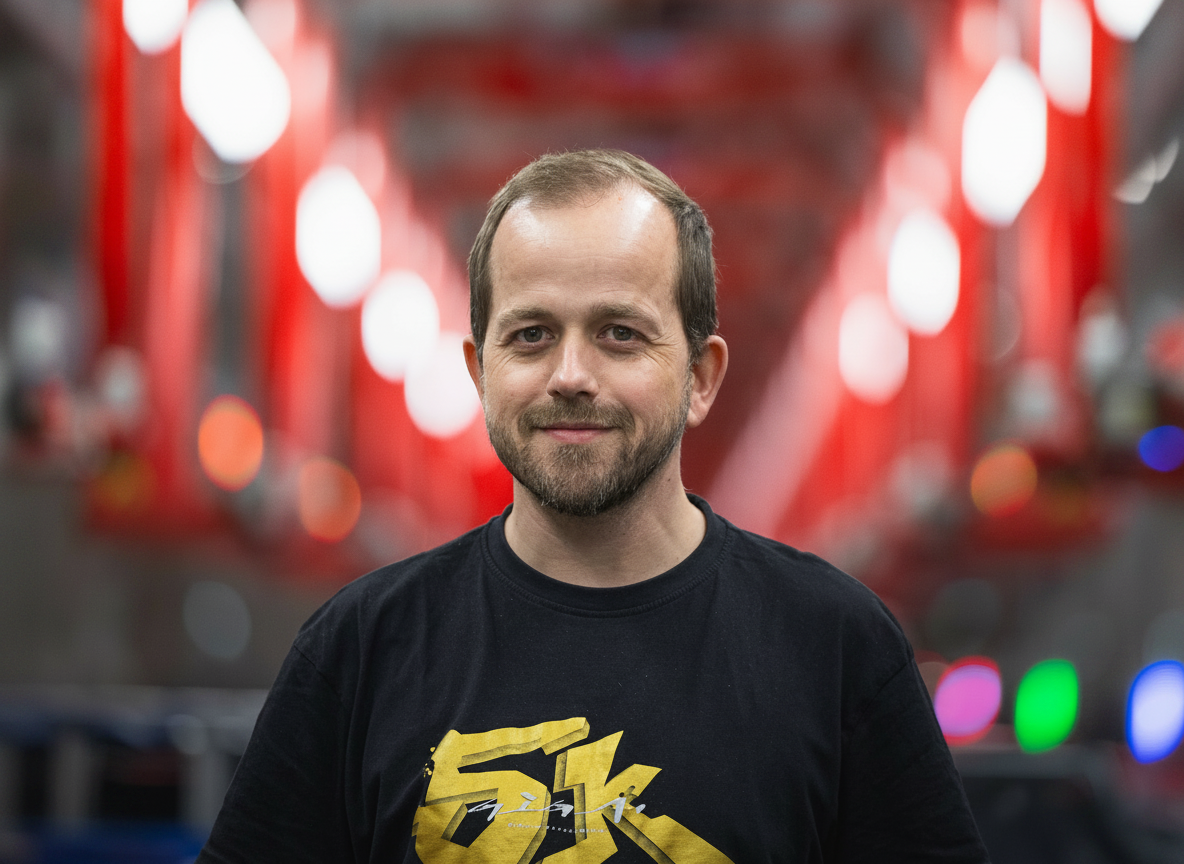
Tesla’s Gigafactory in Grünheide near Berlin has long been firmly established among Germany’s vehicle manufacturers and automotive locations, and with its latest investment announcements it is developing into a major producer of cells and batteries for electric vehicles. We are therefore particularly pleased that André Thierig, plant manager of Gigafactory Berlin-Brandenburg, found the time to speak with us – to share his assessment of the battery value chain in Germany and Europe and to explain in more detail what Tesla has planned in Grünheide.
Mr Thierig, a few weeks ago Tesla’s decision to expand battery manufacturing in Grünheide provided a very valuable boost for Germany as a battery location. What exactly lies behind it?
Demand for electric vehicles rose sharply across Europe in the first quarter of this year. Demand for Tesla’s Model Y, which we build here in Grünheide, has risen sharply as well. We are now responding to that and will increase our production from summer 2026. To do so, we are hiring 1,000 new employees by the summer of this year.
At the same time, Tesla has always pursued a strategy of high vertical integration at its sites and strong localisation of its supply chain. Ramping up battery production as well is therefore only logical. We are investing a total of 350 million dollars in this and will hire 1,500 new employees for cell production over the medium term – from cell manufacturing through to the finished pack. Our goal is to produce 18 GWh at the site.
Do you also see this as a signal that the European battery ecosystem is beginning to scale?
On that point, aspiration and reality are still a long way apart. A great deal is being invested in battery research in Europe. At the same time, many EU initiatives currently rely on requirements that make batteries “made in Europe” a condition and that also seek to regulate which technology may be used in battery manufacturing. That disregards how much innovation is still taking place in battery production – and how complex and capital-intensive scaling up battery manufacturing is in particular. Locations such as China and the USA are well ahead of us here. They have built up manufacturing capacity and expertise that we in Europe still lack. We are going ahead now and want to show that battery manufacturing at scale is possible in Europe too.
Tesla is the pioneer of electric mobility and has become indispensable in the major global markets. For Europe and the European battery ecosystem, Tesla has become a very important player and a bellwether. What new, innovative approaches are you taking with battery manufacturing in Grünheide?
At the site we will manufacture the new 4680 battery cell, relying entirely on the dry coating process. This process works without solvents and without energy-intensive drying steps, considerably reduces the floor space required in the factory and lowers production costs – a turning point in cell manufacturing technology. We are very proud of this process, as it saves a substantial amount of energy and allows us to produce in a more environmentally friendly way.
Looking at global developments, where do we currently stand from Tesla’s point of view, and where do you see an urgent need to act?
At present we are seeing a great many rules and regulations that have already been adopted or are planned in Brussels. That shows there is an awareness of how important Europe’s own battery production is for building resilience. In principle, that is to be welcomed. But supporting this ramp-up of battery manufacturing takes more than that. We need to become more competitive in Europe. Production and energy costs have to come down to an internationally comparable level. A steady stream of new regulations governing battery technology is an obstacle here, given that the technology itself is continuing to evolve.
Supply chains for critical raw materials need to be made resilient – through recycling, diversification and also through extracting raw materials both inside and outside the EU. And, as in the USA, output-oriented funding is of course needed. This would create globally comparable competitive conditions in Europe. That is the only way to ensure that batteries “made in Europe” will in future be produced at scale.
We look forward to further developments at Tesla. We wish you every success with the challenges ahead and with implementing these investments, and we thank you for this interesting conversation.
With sincere thanks